
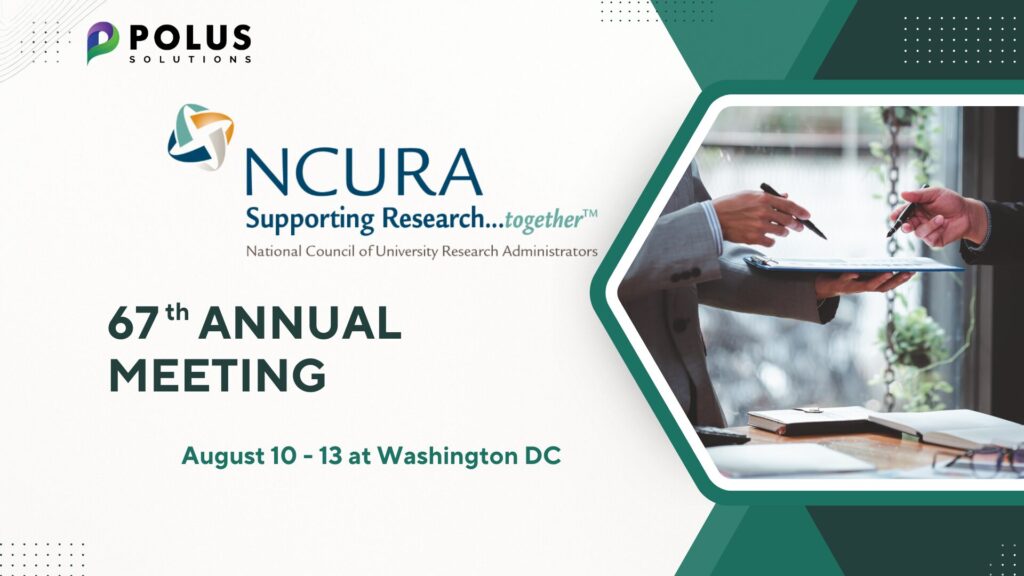
The NCURA 67th Annual Meeting, scheduled for August 10-13, 2025, in Washington, DC, promises an extensive program designed to empower research administrators with the latest knowledge, skills, and networking opportunities. To help attendees plan their time and make the most of this event, here’s a guide to key sessions and an introduction to some of the expert speakers you’ll hear from during the conference.
Conference Guide Contents – NCURA 67ᵗʰ Annual Meeting
- Key Conference Highlights
- Featured Speakers and Their Contributions
- Top 10 Key Events to Watch Out for at NCURA 67th Annual Meeting
- Planning Tips for Attendees
- Conclusion
1. Key Conference Highlights
- Workshops and Sessions: Covering vital topics such as organizational structures, budgeting, compliance regulations, leadership, research development, change management, AI integration, and global collaborations.
- Networking Events: Including regional business meetings, welcome dinners, hospitality suites, and wellness activities designed to foster community and peer learning.
- Technology and Innovation: Exposure to AI-powered tools, streamlined administrative software, and data analytics to enhance operational efficiency and research outcomes.
- Professional Development: Sessions focused on leadership coaching, succession planning, resilience, and mentoring to support growth across all career stages.
- Special Interest Tracks: Programming designed for Predominantly Undergraduate Institutions (PUIs), Emerging Research Institutes (ERIs), Minority Serving Institutions (MSIs), and international participants.
2. Featured Speakers and Their Contributions
- David Richardson & Rosemary Madnick: Renowned for their expertise in organizational management and grant budgeting, they will lead workshops exploring office structures that optimize efficiency and strategic budgeting practices.
- Dan Harmon & Bryan Bachman: Pioneers in applying AI to research administration, they offer practical insights into AI use cases, from chatbot automation to grant recommendation engines, demonstrating how technology can transform workflows.
- Amy Walter: Esteemed political journalist providing analysis on the implications of political dynamics on research funding and policy, helping attendees understand the broader context influencing the research landscape.
- Paul Begala: Experienced political strategist and commentator offering historical and current perspectives on U.S. politics impacting research priorities and institutional strategies.
- Carol Wood & Sabari: Noted innovators in AI applications within research administration, Carol and Sabari bring deep experience in developing AI-enabled platforms. Carol Wood focuses on cutting-edge AI search tools and intelligent systems that aid compliance management, while Sabari contributes expertise in machine learning models that improve data integration and information retrieval. Their collaborative work has led to improved compliance reporting and streamlined administrative tasks to support research excellence.
- Megan Moore & Beth Kingsley: Specialists in managing international collaborations and compliance with export controls, they will provide guidance on navigating complex global research agreements.
- Erin Bailey & Kay Gilstrap: Leadership coaches who focus on developing effective team coaching strategies and enhancing motivational leadership within research administration departments.
- Roseann Luongo & Brigid Cooper: Experts in financial compliance and audit readiness, providing actionable techniques to manage risks and maintain regulatory adherence.
- Jessica Foley: Authority on clinical research IT systems and the integration of new technologies enhancing research operations and compliance efforts.
3. Top 10 Key Events to Watch Out for at NCURA 67th Annual Meeting
A. New Research Administrators Guide to Building a Better Budget
Date & Time: August 10, 2025 | 8:15 AM – 11:45 AM
Speakers: Maggie Ewell, Heather Lennon
Learning Objectives:
- Understand Uniform Guidance cost principles — Reasonable, Necessary, and Allocable — plus 2024 updates on thresholds.
- Identify elements of a budget.
- Differentiate between direct and indirect costs.
- Recognize varying sponsor approaches to budgets.
- Calculate indirect cost rate bases.
- Define personnel cost categories, apply salary caps.
- Distinguish subrecipients, subcontractors, and consultants.
- Formulate detailed budgets with strong justifications.
- Understand differences between detailed budgets and NIH modular budgets.
B. Understanding the Uniform Guidance on a Practical Level
Date & Time: August 10, 2025 | 8:15 AM – 11:45 AM
Speakers: Rebecca Hunsaker, Ann Holmes
Learning Objectives:
- Locate and reference clauses in the Uniform Guidance.
- Identify tools and resources for costing and allowability decisions.
C. Introduction to Federal Service Centers: Essentials for Beginners
Date & Time: August 10, 2025 | 1:00 PM – 4:30 PM
Speakers: David Schultz, Michelle Schardein
Learning Objectives:
- Understand federally chargeable service centers and their role in higher education.
- Learn budgeting, rate-setting, and cost recovery basics.
- Identify regulations impacting service center management.
- Explore internal controls, policies, and procedures for success.
D. Research Security and Export Controls for the Research Administrator
Date & Time: August 10, 2025 | 1:00 PM – 4:30 PM
Speakers: Elizabeth Peloso, Jessica Buchanan, John Jenkins
Learning Objectives:
- Define research security and its program elements.
- Understand how export controls intersect with research security.
- Leverage existing practices and resources to support security programs.
E. Navigating the Federal Landscape: Current Lawsuits and the Impact on Research Administration
Location: Jefferson, Concourse Level
Date & Time: August 11, 2025 | 10:15 AM – 11:30 AM
Speakers: Roseann Luongo, Jeremy Forsberg, Abby Guillory, Christine Savage
Learning Objectives:
- Understand recent lawsuits affecting indirect costs, DEI initiatives, and more.
- Anticipate changes in research administration due to legal shifts.
- Apply strategies to manage challenges and seize new opportunities.
F. Smart Search, Real Impact: MIT’s Use of AI and LLMs for Large-Scale Document Analysis
Location: Cardozo, Terrace Level
Date & Time: August 12, 2025 | 8:15 AM – 9:45 AM
Speakers: Carol Wood, Sabari Nair
Learning Objectives:
- See how regulatory pressures can drive innovation.
- Learn steps to implement AI-based document search and analysis.
- Understand the technical architecture of scalable AI solutions.
- Convert short-term fixes into sustainable tools.
G. Prime Solutions: Ethical AI in Research Administration
Location: Columbia 11 & 12, Terrace Level
Date & Time: August 12, 2025 | 10:15 AM – 11:30 AM
Speakers: Patience CDeBaca, Toby Stroud
Learning Objectives:
- Identify AI tools relevant to research administration.
- Assess ethical and compliance risks in AI use.
- Build frameworks for AI implementation aligned with institutional and federal standards.
H. Transfer Seasons: Navigating Award and PI Transfers from Start to Finish!
Location: Lincoln West, Concourse Level
Date & Time: August 13, 2025 | 8:30 AM – 9:30 AM
Speakers: Tahira Mershon, Michele Hay
Learning Objectives:
- Understand requirements, implications, and challenges of grant transfers.
- Learn efficient processes for award and PI transfers.
- Gain insights from peers through Q&A and discussion.
I. Grant Team: Building Effective Collaborations Across Pre and Post Award at a PUI
Location: Lincoln West, Concourse Level
Date & Time: August 13, 2025 | 9:45 AM – 10:45 AM
Speakers: Christine Daluz, Dalila Alves
Learning Objectives:
- Create communication workflows for grant administration.
- Clarify team roles across pre- and post-award functions.
- Apply strategies for stronger collaboration.
J. Harnessing AI to Tame Research Administration Complexity
Date & Time: August 10, 2025 | 8:15 AM – 11:45 AM
Speakers: (Not listed here — check official program)
Learning Objectives:
- Understand AI’s role in streamlining complex admin workflows.
- Identify tools and methods for AI adoption in research offices.
- Plan for long-term scalability of AI solutions.
4. Planning Tips for Attendees
- Carefully review the conference program in advance and select sessions most relevant to your institutional needs and career goals.
- Take advantage of digital tools like the conference app to customize your schedule and access session materials.
- Don’t miss the opportunity to connect with peers during networking events and informal gatherings, relationships built here can support your professional journey well beyond the meeting.
- Consider sessions and workshops that address emerging challenges such as AI in administration, changing federal policies, and global partnerships to stay ahead in the evolving research environment.
- Utilize wellness offerings like meditation spaces and fitness activities to maintain energy and focus throughout the conference.
5. Conclusion
The NCURA 67th Annual Meeting stands as a cornerstone event for research administrators seeking to enhance their knowledge, expand their networks, and engage with innovations shaping the future of research management. With a lineup of sessions, expert-led workshops, and invaluable networking opportunities, this conference is an unmissable experience for professionals across all levels.
For a complete overview of the conference schedule and session details, visit the official NCURA program page at https://www.ncura.edu/annualmeeting/Education/PROGRAM.aspx.
Polus Solutions is proud to be part of this exciting event. We invite you to stop by Booth #210 to learn more about how AI is transforming research administration and to explore our innovative solutions designed to support your institution’s success.



 Request a Demo